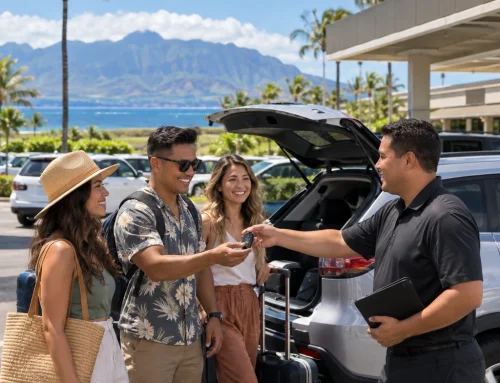
Planning a trip to the Valley Isle? Understanding Maui car rental insurance before pickup can help you avoid surprise charges, unnecessary duplicate coverage, and stressful decisions at the counter. Maui’s roads are scenic but varied, from busy streets in Kahului and Kihei to narrow, winding routes near Hana. A small mistake in your insurance choices can become an expensive one if the rental vehicle is damaged, stolen, or involved in a collision.
The good news is that you may already have useful protection through your personal auto policy, credit card, travel insurance, or the rental company’s protection options. In this guide, we explain what car rental coverage in Maui typically includes, how Hawaii’s insurance requirements work, what rental car insurance options to compare, and practical ways to save money. We will also show why choosing an affordable, long-term rental from a local company such as Maui Cruisers can make coverage costs easier to manage.
What Maui Car Rental Insurance Usually Covers
“Insurance” at a rental counter can refer to several different products. They do not all protect you in the same way, so it is important to identify what each option covers before signing the rental agreement.
Liability coverage
Liability coverage generally helps pay for injuries to other people or damage to their property when you are legally responsible for an accident. It does not usually pay to repair the rental vehicle itself or replace your personal belongings.
Hawaii’s minimum auto insurance requirements changed on January 1, 2026. The state’s current minimum liability limits are $40,000 for bodily injury per person, $80,000 per accident, and $20,000 for property damage. Hawaii also requires at least $10,000 in personal injury protection, or PIP, for medical and rehabilitation expenses. You can review the current limits in the Hawaii Department of Commerce and Consumer Affairs auto insurance FAQ.
Those are legal minimums, not necessarily the amount that fully protects your finances. If you have significant assets, travel with several passengers, or want more protection than the minimum, ask whether your existing policy provides higher liability limits for rental vehicles.
Collision or loss damage protection
Collision Damage Waiver, often called CDW, or Loss Damage Waiver, known as LDW, is usually offered by the rental company. Technically, it is generally a waiver of the rental company’s right to charge you for certain vehicle damage rather than a traditional insurance policy.
Depending on the agreement, it may cover collision damage, theft, vandalism, or the rental company’s loss of use while the vehicle is being repaired. However, exclusions can apply. Tires, glass, keys, undercarriage damage, unauthorized drivers, careless driving, and restricted roads may receive different treatment. Always read the specific terms for your vehicle and rental period.
The National Association of Insurance Commissioners explains that CDW or LDW may cost approximately $10 to $20 per day, although actual rates vary by company and vehicle. Its consumer guide to rental car insurance also notes that your own collision and comprehensive coverage may already extend to a rental car.
Personal accident and personal effects coverage
Personal Accident Insurance may help with medical expenses for the renter and passengers after a covered crash. Personal Effects Coverage is designed to help with theft of belongings from the rental vehicle. Your health insurance, travel insurance, homeowners policy, or renters policy may already provide some protection, but limits and deductibles differ.
Because coverage depends on your individual policies, do not assume that a product is unnecessary—or that it is automatically included. Confirm the details before your Maui rental begins.
Which Rental Car Insurance Options Should You Compare?
The best choice depends on what you already have, how long you are renting, and how much financial risk you are comfortable accepting. Consider these four possible sources of Maui rental car protection.
Your personal auto insurance
Many personal auto policies extend liability and physical-damage coverage to rental cars in the United States. However, the coverage may be limited by the policy’s vehicle value, rental duration, deductible, or use restrictions. Some policies also exclude business use, certain vehicle types, or rentals outside the country.
Before traveling, call your insurer and ask specific questions:
- Does my policy cover rental cars in Hawaii?
- Does coverage include liability, collision, comprehensive, and theft?
- Does my deductible apply to the rental vehicle?
- Is loss of use, diminished value, towing, or administrative expense covered?
- Are additional drivers covered if they are listed on the rental agreement?
- Is there a maximum rental period?
Ask for written confirmation or a declaration page if the rental company requires proof of insurance. An insurance card may show that you have a policy, but it may not explain whether rental vehicles are covered.
Credit card rental protection
Some credit cards offer collision and theft protection when you pay for the entire rental with that card. This benefit is often secondary, meaning it may pay only after other applicable insurance has been used. Some cards require you to decline the rental company’s CDW, while others have exclusions for long-term rentals, certain vehicle classes, additional drivers, or specific types of damage.
The NAIC recommends contacting your credit card provider directly to verify benefits. Do not rely solely on a general benefits page or a customer service representative’s assumption. Request the current guide to benefits and check whether a rental in Hawaii qualifies.
Rental company protection
Rental company protection can be convenient because it is arranged when you book or pick up the vehicle. It may also reduce the need to file a claim with your personal insurer. The tradeoff is an additional daily charge, and the price can add up quickly on a weeklong or monthlong rental.
Ask whether the protection is primary or secondary, whether it includes liability, and what exclusions apply. Also confirm whether all approved drivers are covered and whether the agreement limits where you may drive. Maui’s rural roads and changing conditions make these details particularly important.
Non-owner or travel insurance
If you do not own a car, a non-owner auto policy may provide liability protection when driving rental vehicles, although it typically does not cover damage to the rental itself. Travel insurance may include rental vehicle protection as well, but benefits vary substantially by plan.
Compare the policy’s limits, deductible, exclusions, claims process, and rental-period restrictions. The cheapest option is not always the most useful if it excludes the exact type of damage most likely to create a large bill.
How to Save Money on Maui Car Rental Insurance
Buying every option at the counter is rarely the most economical approach. Instead, compare your existing coverage with the rental company’s options before you arrive in Hawaii.
Check coverage before booking
Insurance decisions are easier when you have time to compare documents. Call your auto insurer and credit card provider several days before your trip. Save confirmation emails, policy documents, and phone numbers in your travel records.
Then compare the potential costs. For example, paying for overlapping CDW on a 30-day rental can be far more expensive than a policy endorsement or a suitable credit card benefit. On the other hand, declining protection without confirming coverage could leave you responsible for the rental vehicle, towing, loss of use, and other charges after an accident.
Consider a longer rental period
Daily insurance charges can be especially significant for visitors staying several weeks or months. A long-term rental may provide a better overall value because the base vehicle rate can be reduced, and some local companies offer more flexible protection pricing for extended rentals.
Maui Cruisers focuses on affordable, long-term car rentals, making it practical to request a complete quote that includes the vehicle rate, taxes, fees, deposit, approved drivers, and available protection. Comparing the total cost—not just the advertised daily rate—helps you find genuinely cheap car rentals in Maui.
Choose the right vehicle and pickup arrangement
A basic, well-maintained vehicle may cost less to insure than a luxury, specialty, or high-value model. If you mainly need transportation between the airport, lodging, beaches, restaurants, and errands, an economical car can provide better value than paying extra for features you will rarely use.
Also ask about airport fees, delivery charges, cleaning requirements, fuel policies, and after-hours pickup. A lower rental rate can lose its advantage when additional fees are added at checkout.
Reduce preventable damage
Good driving habits do not replace insurance, but they can reduce the risk of a claim. Before leaving the pickup location, photograph the vehicle from every side and record existing scratches, dents, wheel damage, and windshield chips. Confirm that the rental company has documented them.
During the rental:
- Keep valuables out of sight and lock the vehicle when unattended.
- Use designated parking areas and avoid narrow shoulders whenever possible.
- Drive slowly on unfamiliar, winding, or wet roads.
- Follow the rental agreement’s road-use restrictions.
- Do not allow an unlisted driver to operate the vehicle.
- Contact the rental company promptly after a collision or mechanical issue.
Important Questions Before You Pick Up a Maui Rental Car
Rental agreements differ, so ask for clear answers rather than assuming that a familiar term means the same thing everywhere. This is particularly important for long-term rentals, where exclusions and policy limits may apply for a longer period.
Use this checklist before accepting the keys:
- What is included in the quoted price? Ask about liability protection, taxes, fees, deposits, and roadside assistance.
- What is the deductible? A protection product may still leave you responsible for a deductible or excluded damage.
- Is the coverage primary or secondary? This affects which provider handles the claim first.
- Who is covered? Confirm that every driver is listed and eligible.
- What damage is excluded? Ask specifically about tires, glass, keys, roof, undercarriage, towing, and interior damage.
- Are there road restrictions? Some routes or unpaved roads may be excluded by the contract.
- What should I do after an accident? Get the company’s emergency number and reporting instructions in writing.
Hawaii law also recognizes specific insurance requirements for rental vehicles. The state statute describes liability protection for a renter or authorized operator using a “U-drive” vehicle with the rental company’s permission. You can review the relevant language in Hawaii Revised Statutes Section 431:10C-301. Even when a legal minimum applies, the rental contract still determines how optional waivers, deductibles, exclusions, and renter responsibilities work in practice.
If you are unsure, ask the rental company for clarification and consult your insurer. A few minutes of preparation can prevent a costly misunderstanding.
Conclusion: Find Affordable Maui Rental Car Protection
The right Maui car rental insurance is not necessarily the most expensive package. Start by checking your personal auto policy, credit card benefits, health insurance, and travel coverage. Then compare those protections with the rental company’s liability and damage-waiver options, paying close attention to deductibles, exclusions, road restrictions, and long-term rental limits.
For visitors who need a vehicle for more than a few days, a local company specializing in affordable long-term rentals can make the numbers easier to understand. Maui Cruisers makes it simple to request a quote online or by phone and compare the full rental cost before you commit. With the right vehicle, clear coverage, and a careful review of the agreement, you can enjoy the island with confidence while keeping your Maui rental car protection—and your total travel budget—under control.