The Road to Hana is one of Maui’s most famous drives, winding along 64 miles of coastal highway with waterfalls, jungle valleys, and dramatic ocean views. Most visitors drive the main route from Kahului to Hana and either return the same way or continue on what’s known as the “back road to Hana”—a remote stretch along Piilani Highway that loops around the island’s southeastern shore. While the idea of completing the full circle sounds appealing, the back road to Hana, Maui presents serious safety risks that catch unprepared drivers off guard. In this guide, we’ll walk through the specific hazards of this route, why most rental car companies prohibit it, and what you need to know before deciding whether to attempt it.
What Is the Back Road to Hana, Maui?
The back road to Hana refers to the continuation of Piilani Highway (Route 31) beyond Kipahulu and Hana, traveling through the remote Kaupo region on Maui’s southeastern coast. Unlike the well-maintained Road to Hana that brings you from Paia to Hana town, this section is far more isolated and challenging.
According to recent reports, the road “has some sections that are very rough, like washboarded dirt roads” and alternates between paved and unpaved surfaces for roughly 20 miles. The terrain includes single-lane stretches with no guardrails, blind curves carved into steep cliffs, and stream crossings that can flood during heavy rain. Paul Barany, deputy director of Maui County’s Department of Public Works, notes that “these roadway sections are challenging and require drivers to be aware of the terrain in which they are driving.”
The Geography of Isolation
What makes the back road particularly dangerous is its remoteness. The stretch from Kaupo to Ulupalakua has virtually no visitor infrastructure—no gas stations, no restaurants, no bathrooms, and most critically, no reliable cell phone service. If something goes wrong, you’re truly on your own for miles. Third-generation Kaupo resident Linda Clark, executive director of the Kaupo Community Association, has watched traffic steadily increase through the years and emphasizes the lack of emergency support: “There’s almost no cellphone service, so if something happens, which it rarely does, but if something happens, the consequences are pretty serious because whomever is out there cannot really get in contact with anyone for help.”
Why Rental Car Companies Prohibit the Back Road to Hana
If you’ve rented a car in Maui, you’ve probably seen the map in your rental agreement with certain roads marked in red or highlighted as prohibited. The back road to Hana is almost always on that list, along with Kahekili Highway in West Maui. These restrictions aren’t arbitrary—they’re based on real risks and costly consequences.
Mechanical Damage and Voided Coverage
The rough terrain takes a toll on vehicles. Frank Saab of Frank’s Friendly Cars explains that “the road has some sections that are very rough, like washboarded dirt roads, those can be tough on cars. It can cause problems with the suspension or with other components… And there’s also a possibility of bottoming out the car and damaging the engine or transmission by hitting the ground.” A rental sedan losing an oil pan to a rock strike near Kaupo can generate repair bills in the thousands of dollars.
More importantly, the prohibited-roads clause typically voids your collision damage waiver and roadside assistance for any incident on these routes. Maui rental car restrictions are usually about the agreement, not just the vehicle capability. Even if you’re driving an SUV like a Honda CR-V or Toyota RAV4, violating the contract means you’re personally liable for all damage, towing costs, and lost rental revenue while the car is being repaired.
The True Cost of Getting Stranded
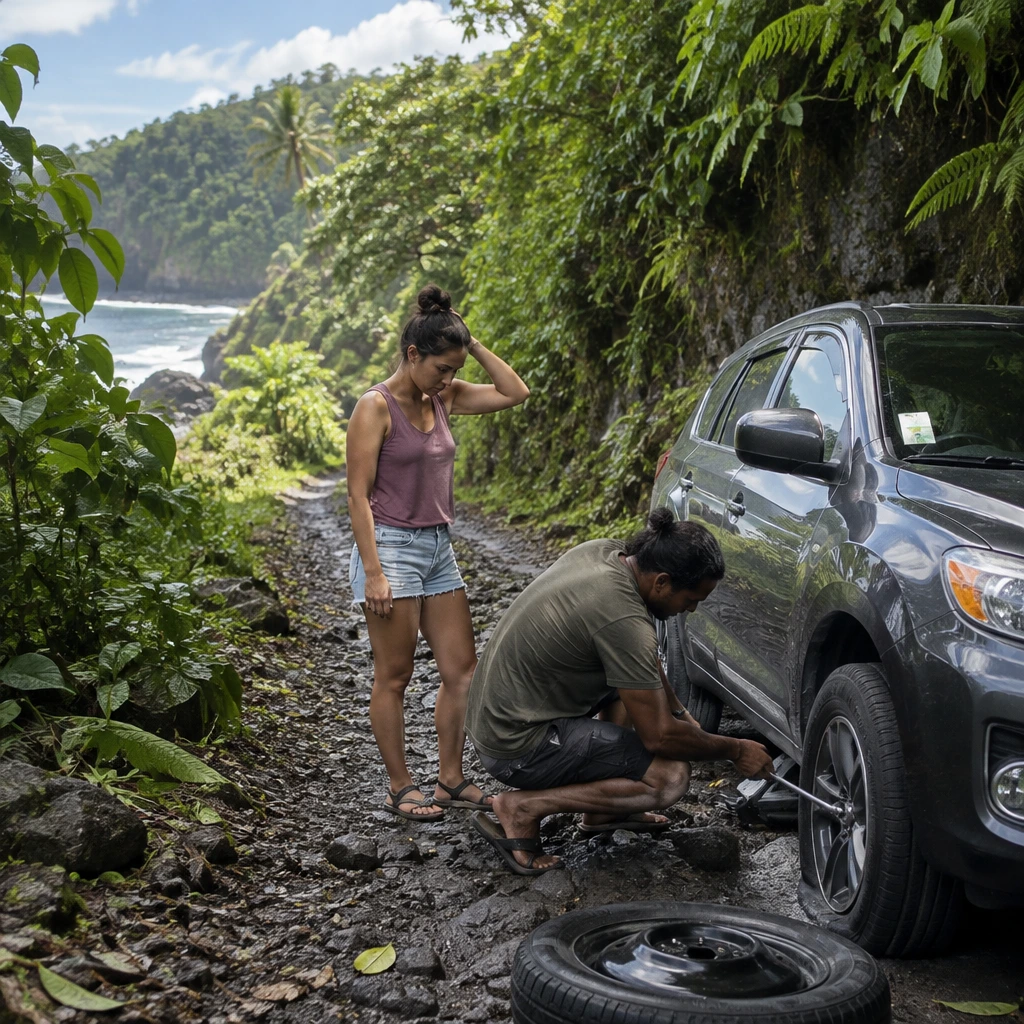
Towing from the back road to Hana is expensive and slow. Only one independent tow company serves the area, and same-day service is essentially impossible. Saab recounts the story of one couple whose car broke down on the remote highway: they called AAA for roadside assistance, but the contracted tow company refused to go. The couple spent the night in their car waiting for help, and when a tow truck finally arrived, “the cost of the tow from the back road to Hana is $2,000.” Standard towing rates in the area run $8 to $12 per mile, and the distance back to Kahului can generate bills of $500 to $800 or more—costs that insurance carriers routinely deny when tied to contract-prohibited driving.
Specific Safety Hazards Along Piilani Highway
Beyond the financial and logistical risks, the back road to Hana presents real physical dangers that even experienced drivers find challenging.
Road Conditions and Weather
The condition of Piilani Highway varies more dramatically than any road in the Hawaiian Islands. Sections near Ulupalakua run smooth with 45 mph speed limits, but the middle 15 miles through Kaupo drop to loose gravel, single-lane pavement patched with hot mix, and stream crossings that fill after hard rain on Haleakala’s summit. The road is particularly treacherous from December through March, when heavy rainfall can trigger rockfalls and mudslides that block the route entirely.
The narrow, winding sections include one-lane stretches with no pullouts, meaning if two cars meet, one driver must reverse alongside steep cliff drop-offs. Driver fatigue sets in quickly, as the constant twists and turns demand unrelenting attention. While uncommon, the route has seen fatal crashes with cars plunging off the cliff.
Wildlife and Livestock Hazards
Clark also points to additional dangers that catch visitors off guard: “There’s open range—cattle on the road, goats on the road, and deer on the road and pigs on the road.” These animals become especially dangerous at night when there are no streetlights in the rural area. Hitting livestock can cause serious vehicle damage and injury, and the remote location makes emergency response difficult.
Emergency Response Times
When accidents or breakdowns occur, help is hours away. Clark notes that 911 calls from the area are routed to the island of Hawaii across the channel, requiring callers to specifically request connection to Maui dispatch. Even then, emergency response can take hours to reach the remote southeastern shore. She’s personally witnessed stranded visitors waiting five hours or more for assistance, eventually compelling her to drive them the 1.5 to 2 hours back to Kahului herself.
The Impact on Local Communities in Hana, Maui
The safety risks don’t just affect visitors—they place a burden on the small rural communities along the route. Kaupo and Kahakuloa have very limited visitor infrastructure, and residents find themselves dealing with the consequences of unprepared tourists attempting the drive.
Graffiti on the side of a bridge in southeast Maui puts it bluntly: “If you’re from town, turn around.” The area’s remoteness and lack of bathrooms lead to roadside littering and human waste issues. Local residents see their daily lives disrupted by responding to stranded visitors, and the steady increase in traffic—which Clark attributes partly to more of the road being paved and to visitors displaced from West Maui after the 2023 Lahaina wildfire—has strained the community’s resources.
Clark has also noticed a concerning trend: “We’re seeing a lot of visitors and buses coming through the reverse,” entering from the Upcountry side near Ulupalakua rather than from Hana. This approach can be even more dangerous because drivers don’t realize how challenging the road becomes until they’re already committed. She advises that if you’re coming from Ulupalakua, the best place to turn around is near mile marker 27.
Safer Alternatives and What to Do Instead
If you’re planning to drive the Road to Hana, the safest and most enjoyable approach is to take your time on the main route, explore Hana town and the surrounding area, and return the same way you came. The traditional Road to Hana offers everything that makes the drive special—waterfalls, coastal views, swimming holes, and tropical scenery—without the serious hazards of the back road.
Plan Your Return Route Wisely
Most visitors worry about “doing the same drive twice,” but the return journey on the main Road to Hana looks completely different. The lighting changes throughout the day, revealing new views and photo opportunities. You’ll also notice landmarks and turnouts you missed on the way out, and you can stop at places you passed earlier when you were focused on reaching Hana.
If you do want to see more of the island without risking the back road, consider breaking your trip into multiple days. Spend one day driving to Hana and exploring the area, then return and take a separate trip Upcountry to see Kula, Makawao, and the lower slopes of Haleakala. This approach gives you diverse scenery without the danger.
Check Conditions Before You Go
Before any drive in Maui, check current road conditions and alerts. The Hawaii Department of Transportation maintains updates on lane closures and construction affecting state highways, including Hana Highway and Piilani Highway. Maui County also posts emergency road closure notifications, and Haleakala National Park issues alerts that can affect access to Kipahulu and other areas along your route. Weather and flood conditions can change rapidly, especially during winter months.
Choose the Right Vehicle for Maui Driving
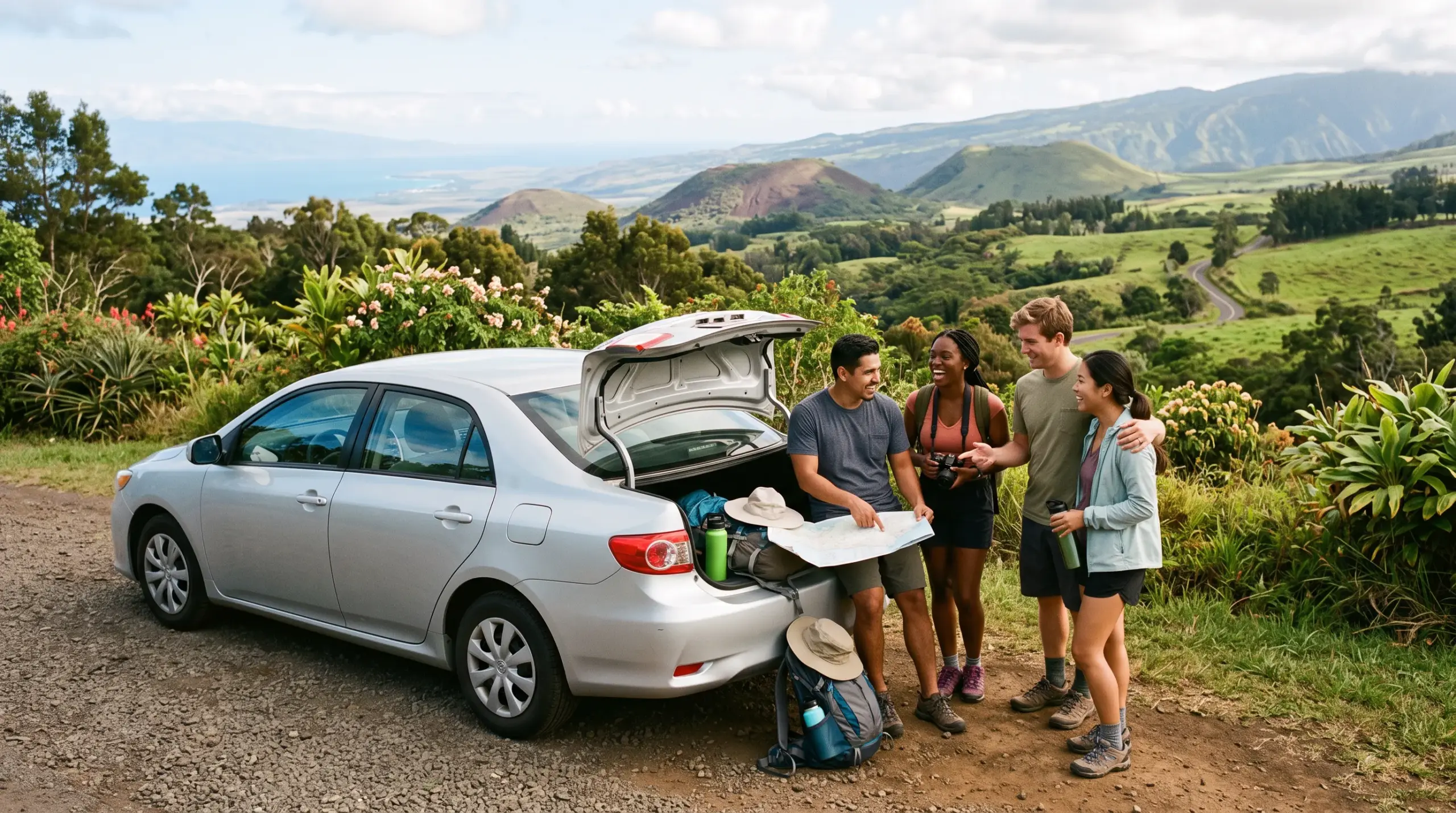
A common misconception is that you need a Jeep or 4WD vehicle to safely explore Maui. In reality, the main Road to Hana and virtually every other visitor destination on the island is perfectly accessible in a standard sedan or mid-size SUV. Vehicles like the Toyota Corolla, Honda CR-V, or Toyota RAV4 offer several advantages for Maui travel:
- Better fuel economy: Gas prices in Hawaii are among the highest in the nation, and efficient vehicles save you money on every trip
- Lower rental rates: Economy and mid-size cars cost significantly less to rent than specialty vehicles
- Easier parking: Compact cars are simpler to maneuver in tight parking lots at beaches, trailheads, and Hana town
- Practical for mixed use: A reliable sedan handles both scenic drives and everyday errands like grocery runs
The roads you should be driving on Maui—the main Road to Hana, the route to Haleakala summit, coastal highways, and town streets—are all paved and well-maintained. Save your money and skip the novelty premium of a Jeep rental; you don’t need it, and it won’t make prohibited roads any safer or more legal to drive.
Making the Smart Choice for Your Maui Trip
The back road to Hana, Maui may look tempting on a map, offering the appeal of a complete loop around the island. But the reality is far less romantic: rough terrain, mechanical risks, voided insurance coverage, expensive towing bills, limited cell service, slow emergency response, and the possibility of spending a night stranded in your car waiting for help. The handful of additional views you might see simply aren’t worth the safety risks and potential costs.
When you rent a car for your Maui trip, read your rental agreement carefully and respect the prohibited roads. These restrictions exist to protect you, the vehicle, and the local communities that bear the burden when things go wrong. The traditional Road to Hana offers an incredible driving experience that’s both safe and accessible—there’s no need to push beyond those boundaries.
At Maui Cruisers, we’re here to help you plan a safe and memorable Maui adventure. Our fleet of reliable economy and mid-size vehicles—including Toyota Corollas, Camrys, CR-Vs, and RAV4s—are perfect for exploring everything the island has to offer, from the Road to Hana to Upcountry farms to West Maui beaches. And unlike automated booking systems, when you contact us, you’ll speak directly with our team. We’re available around the clock by phone or text to answer your questions, help you understand road conditions, and make sure you have the right vehicle for your plans. Book online at mauicruisers.net or give us a call—real people, real service, and the reliable transportation you need to enjoy Maui safely.