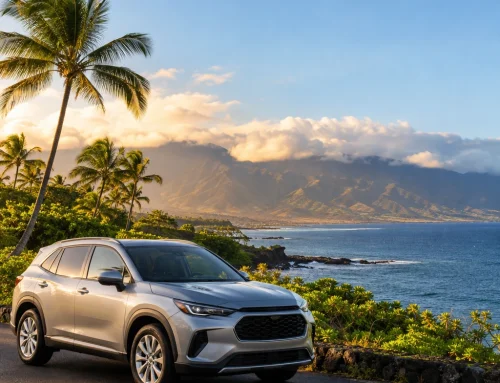
For international travelers, planning a Maui vacation in 2026 means watching more than airfare and hotel rates. Trade policy, currency changes, inflation, and shifting attitudes toward travel to the United States can all affect the final cost of a trip. That is why Trump’s Tariffs and Their Impact on International Travelers to Maui has become a relevant question for visitors from Canada, Japan, Europe, China, Australia, and other international markets.
The important distinction is that tariffs are taxes on imported goods, not a direct fee charged to tourists entering Hawaii. However, they can still influence the cost of visiting Maui indirectly through consumer prices, transportation expenses, exchange rates, business costs, and travel sentiment. This guide explains what international visitors should know, how Maui tourism is performing, and why choosing an affordable Maui car rental can help protect your vacation budget.
Trump’s Tariffs and Their Impact on International Travelers to Maui
In February 2025, the White House announced additional tariffs of 25% on imports from Canada and Mexico and 10% on imports from China. The policy was part of a broader trade strategy that changed several times as negotiations, exemptions, pauses, and retaliatory measures developed. Visitors should therefore avoid assuming that one announcement represents the permanent tariff situation.
The direct effect on an international traveler is limited. A Canadian visitor does not pay a tariff simply for flying to Maui, and a Japanese traveler is not charged a tariff at passport control. Instead, the possible impact appears throughout the travel economy.
- Higher business costs: Tariffs can raise the price of imported vehicles, replacement parts, equipment, food products, and other supplies.
- Higher consumer prices: Businesses may pass some increased costs to customers through restaurant prices, retail prices, activities, and transportation.
- Currency pressure: Trade uncertainty can affect exchange rates, changing how expensive Hawaii feels to overseas visitors.
- Reduced travel confidence: Political tension may cause some travelers to choose another destination, even when they can technically afford a U.S. vacation.
- Changing demand: Fewer international visitors can lead to discounted lodging or rental-car rates during slower periods, while popular dates may remain expensive.
In other words, the Trump tariffs impact Maui travel primarily through the broader economy and international sentiment—not through a specific “Hawaii travel tariff” charged to visitors. Travelers should look at the total trip budget rather than focusing on tariffs alone.
Why Canada matters to Maui tourism
Canada is one of Hawaii’s most important international visitor markets. Reporting based on Hawaii Tourism Authority data indicated that Canadian visitation to Hawaii fell 11.6% in 2025, even though the decline was less severe than the reported 20% to 25% drop in Canadian travel to the continental United States. Hawaii’s distance from the mainland, warm-weather appeal, and strong connections with western Canada may have helped soften the impact.
Nevertheless, a decline in Canadian visitors matters to Maui hotels, restaurants, activity operators, retailers, and transportation companies. Canadian travelers also tend to stay longer than many domestic visitors, making their spending especially valuable to the local visitor economy.
How Trade Tensions Can Change the Cost of Visiting Maui
The cost of visiting Maui is shaped by dozens of factors. Airfare, accommodations, meals, activities, resort fees, taxes, fuel, and transportation all compete for a traveler’s budget. Tariffs may influence some of those costs, but they are only one part of the picture.
Airfare and imported operating costs
Airlines do not add a tariff to each passenger’s ticket. However, airlines operate large fleets that require aircraft parts, fuel, technology, maintenance services, and other globally sourced products. If trade restrictions raise operating costs or contribute to inflation, airlines may eventually adjust fares, schedules, or capacity.
That effect is difficult to isolate. Airfares also respond to jet-fuel prices, aircraft availability, labor expenses, seasonal demand, and competition between carriers. For international travelers, exchange-rate movement may have a more noticeable effect than tariffs. A change in the Canadian dollar, Japanese yen, euro, or Australian dollar can make the same Maui hotel or rental car feel substantially more expensive.
Food, retail, and activities
Maui relies on imported goods because of its geographic location. Restaurants, hotels, grocery stores, tour operators, and retailers must bring many products across the ocean. Tariffs can add pressure to the prices of imported equipment, packaged goods, vehicles, electronics, and supplies.
That does not mean every menu item or activity price rises by the exact tariff percentage. Businesses have several options: absorb some costs, negotiate with suppliers, reduce inventory, adjust portions, or raise prices gradually. For visitors, the practical result is that budgeting a little extra for meals and incidentals is wise.
International travelers can reduce exposure to rising prices by combining paid activities with free beaches, scenic overlooks, farmers markets, and self-guided drives. Renting a vehicle also makes it easier to shop at local markets or grocery stores instead of purchasing every meal near a resort.
Maui Tourism Trends: What Recent Data Shows
Current tourism data does not show a simple collapse in Maui travel. Instead, it shows a recovering and changing market, with different results by month and visitor origin.
The Hawaii Department of Business, Economic Development & Tourism reported that Maui welcomed 229,197 visitors in June 2026, compared with 226,981 in June 2025—a 1.0% increase. Maui visitor spending also rose 1.0%, from $511.5 million to $516.4 million. For the first half of 2026, Maui recorded 1,284,580 visitors, up 1.3% from the same period in 2025, while visitor spending increased 12.3% to $3.34 billion. These figures come from the state’s June 2026 visitor spending and arrivals report.
The broader 2025 picture was also mixed. The Hawaii Tourism Authority’s Maui Destination Management Action Plan reported approximately $5.97 billion in visitor expenditures on Maui in 2025, up 12.7% from 2024. Total Maui arrivals reached about 2.52 million, an increase of 7.0%.
Those figures suggest that Maui continues to attract visitors despite wildfire recovery, inflation, international political tension, and changing travel patterns. However, strong total spending does not mean every traveler is spending more comfortably. A rise in spending can reflect higher prices, longer stays by some visitors, or greater spending among affluent travelers while budget-conscious visitors stay home.
International travel may be more sensitive than domestic travel
International visitors face extra financial friction. They may need to account for currency conversion, international airfare, travel insurance, mobile service, baggage fees, and longer stays. As a result, a relatively small increase in the total cost of a Maui vacation can influence whether a traveler books now, shortens the trip, or chooses Mexico, the Caribbean, Asia, or another destination instead.
Travel Economics warned that tariffs and political rhetoric could discourage international travel to the United States. The Associated Press reported that the organization expected Canadian travel to the U.S. to fall sharply in 2025 and noted that the effect could extend beyond border states to major destinations such as Hawaii. That analysis is a forecast rather than proof that tariffs alone caused any specific change in Maui arrivals, but it highlights the importance of traveler sentiment.
How International Visitors Can Save Money in Maui
When the cost of visiting Maui is uncertain, transportation is one area where travelers can make a clear, practical decision. A rental car is not necessary for every visitor, but it can be valuable for travelers who want to explore multiple parts of the island, visit beaches outside resort areas, drive to local restaurants, or plan a Road to Hana trip.
Choose an economical vehicle
A fuel-efficient sedan or practical compact SUV is often a better value than paying extra for a novelty vehicle. A Toyota Corolla or Toyota Camry can provide comfortable transportation for couples and small families, while a Honda CR-V or Toyota RAV4 offers additional cargo space and a higher seating position.
These vehicles can help international travelers control several costs:
- Lower rental rates: Economy and mid-size vehicles generally cost less than specialty categories.
- Better fuel economy: Efficient vehicles can reduce fuel expenses during long island drives.
- Easier parking: Sedans and compact SUVs are practical in hotel lots, shopping areas, and busy trailhead parking.
- Everyday usefulness: A sensible vehicle works for airport transfers, groceries, beaches, sightseeing, and errands.
- Longer rentals: A weekly or long-term car rental in Maui may offer better value than repeatedly booking short transportation segments.
Travelers do not need to pay a novelty premium for a Jeep, luxury vehicle, or convertible to enjoy Maui. Those categories may look attractive in vacation advertising, but an affordable Maui car rental can leave more money available for food, cultural experiences, accommodations, and activities.
Book transportation with the full budget in mind
International visitors should compare the total rental cost, not only the advertised daily rate. Check taxes, fees, fuel policies, mileage terms, deposit requirements, pickup procedures, and cancellation rules before booking. If you are staying for two weeks or longer, ask about a long-term car rental Maui option rather than assuming that multiplying a short-term rate is the cheapest approach.
It is also useful to plan a realistic driving itinerary. Maui is not enormous, but roads, weather, traffic, and sightseeing stops can make driving time longer than expected. Grouping activities by region can reduce unnecessary mileage and fuel use.
What This Means for Travelers Planning Maui Now
Trump’s tariff policies may influence Maui travel indirectly, but they should not be treated as a reason to cancel a trip automatically. The better approach is to monitor airfare, exchange rates, hotel prices, and visitor data together.
International visitors can make a more resilient plan by:
- Booking refundable or flexible reservations when possible, especially while air schedules and trade policies remain changeable.
- Comparing travel dates rather than assuming every week carries the same price.
- Building a complete budget that includes taxes, resort fees, meals, fuel, parking, activities, and currency-conversion costs.
- Selecting practical transportation instead of paying more for a specialty vehicle.
- Staying longer when the numbers work, since airfare is a major fixed expense and a longer trip can spread that cost across more days.
- Supporting local businesses responsibly by choosing locally owned restaurants, markets, guides, and service providers.
Maui’s tourism outlook will continue to depend on more than tariffs. Wildfire recovery, airline capacity, international exchange rates, visitor preferences, local sentiment, and the overall U.S. economy will all shape demand. The island’s official 2026 destination plan emphasizes both visitor satisfaction and the need to manage tourism in ways that support Maui residents and protect community resources.
Conclusion: Plan a More Affordable Maui Vacation
Trump’s tariffs can affect international travelers to Maui through higher operating costs, consumer prices, currency uncertainty, and changing perceptions of travel to the United States. Still, there is no separate tariff charged to tourists arriving in Hawaii, and recent state data shows that Maui visitation and spending continued to recover in 2025 and the first half of 2026.
The smartest response is careful planning. Compare dates, watch exchange rates, budget for imported goods and island transportation, and choose a reliable vehicle that meets your needs without unnecessary upgrades. For many visitors, a Toyota Corolla, Camry, Honda CR-V, or Toyota RAV4 offers the right balance of comfort, fuel economy, and value.
When you are ready to explore the island, Maui Cruisers offers affordable Maui car rental options for short visits, extended stays, and long-term travel plans. Contact the real Maui Cruisers team by phone or text to discuss your dates and find practical transportation for your trip.