Finding the best time to rent a car in Maui is about more than comparing the daily rental rate. Fuel prices, seasonal demand, airport fees, hotel parking, trip length, and the type of vehicle you choose can all change the real cost of getting around the island. For many visitors, a rental car is the most practical way to reach beaches, scenic overlooks, Upcountry farms, Haleakalā, and stops along the Hāna Highway. However, an oversized or novelty vehicle can make an already expensive trip cost even more at the pump.
This guide explains how to time your Maui car rental, estimate fuel expenses, choose a fuel-efficient vehicle, and avoid common booking mistakes. You will also learn why an economy or mid-size rental—such as a Toyota Corolla, Toyota Camry, Honda CR-V, or Toyota RAV4—can be a smarter choice than paying extra for a vehicle you do not need.
What Is the Best Time to Rent a Car in Maui?
The best time to rent a car in Maui depends on which cost you are trying to reduce. If your priority is the lowest rental rate, look first at periods with less visitor demand and avoid major holiday travel whenever possible. If your priority is fuel, the exact pickup date matters less than choosing an efficient vehicle, reducing unnecessary driving, and comparing local pump prices during your stay.
Maui demand can be especially strong during school vacations, winter escapes, spring break, summer holidays, and the weeks around Thanksgiving, Christmas, and New Year’s. Hawaii’s official tourism information advises visitors to reserve rental cars in advance because vehicles can be in high demand. The state’s Maui transportation guide also notes that rental cars are available at Kahului and Kapalua airports, while other transportation options include shuttles, tour buses, taxis, and public transportation.
Shoulder seasons can offer better value
For a balance of availability and affordability, many travelers look at the shoulder periods between Maui’s busiest vacation seasons. These dates are not a guarantee of the lowest price, since rental companies use changing inventory and demand-based pricing. Still, traveling outside major holidays can improve your selection and may make it easier to find a cheap car rental in Maui.
When comparing dates, price the entire reservation rather than focusing only on the advertised daily rate. A slightly higher daily price for a longer rental may be less expensive overall than several short bookings. Also compare airport pickup with local pickup, examine taxes and fees, and confirm whether your lodging charges for parking.
Book early, then keep checking
Booking early is particularly useful for travelers who need a specific vehicle or who are visiting during a busy period. It gives you more choices among fuel-efficient car rentals in Maui and protects you from limited inventory close to arrival. If your reservation has flexible cancellation terms, you can continue monitoring rates and rebook if a better offer appears.
For longer stays, ask about weekly or extended-rental pricing instead of multiplying a daily rate by the number of days. A long-term car rental in Maui may offer better value because the rental cost is spread over more days, while your fuel use remains tied to how much you actually drive.
Maui Fuel Prices in 2026: What Travelers Should Know
Fuel is a major part of a Maui driving budget. As of October 26, 2026, AAA reported a Hawaii average of $5.651 per gallon for regular gasoline. AAA’s Kahului average was listed at $5.732 per gallon, while Hawaii’s statewide diesel average was $7.2427 per gallon. Prices change frequently, so treat those figures as a dated planning reference rather than a promise about what you will pay when you arrive.
AAA’s daily price data also showed Hawaii’s regular gasoline average at $4.4828 per gallon one year earlier, illustrating how quickly fuel costs can change. In a September 17, 2026 report, AAA Hawaii said the statewide regular average was $5.48 per gallon and the Kahului average was $5.52. The report attributed the increase partly to global crude oil conditions and recommended shopping around, using fuel discounts, and combining errands.
That volatility is one reason it is difficult to identify a single “cheapest” week to rent a car based on fuel alone. Pump prices respond to crude oil, refining costs, transportation, retail competition, and taxes. The U.S. Energy Information Administration’s explanation of gasoline prices identifies those components and notes that gasoline demand and refining costs can vary by season and region.
Estimate your fuel budget before booking
A simple estimate can help you compare vehicles and rental lengths. Suppose you drive 400 miles during your trip, gasoline costs $5.75 per gallon, and your vehicle averages 30 miles per gallon. Your estimated fuel cost would be approximately $77.
- 400 miles at 30 mpg: about 13.3 gallons
- 13.3 gallons at $5.75 per gallon: approximately $77
- 400 miles at 25 mpg: 16 gallons, or about $92
The difference may not seem dramatic for one trip, but it becomes more noticeable when you are staying for two weeks, making repeated drives between West Maui and Central Maui, or taking several long sightseeing days. A fuel-efficient sedan can reduce the cost of routine driving, while a compact SUV can provide extra space without the fuel penalty of a much larger vehicle.
Choose a Fuel-Efficient Maui Rental Car
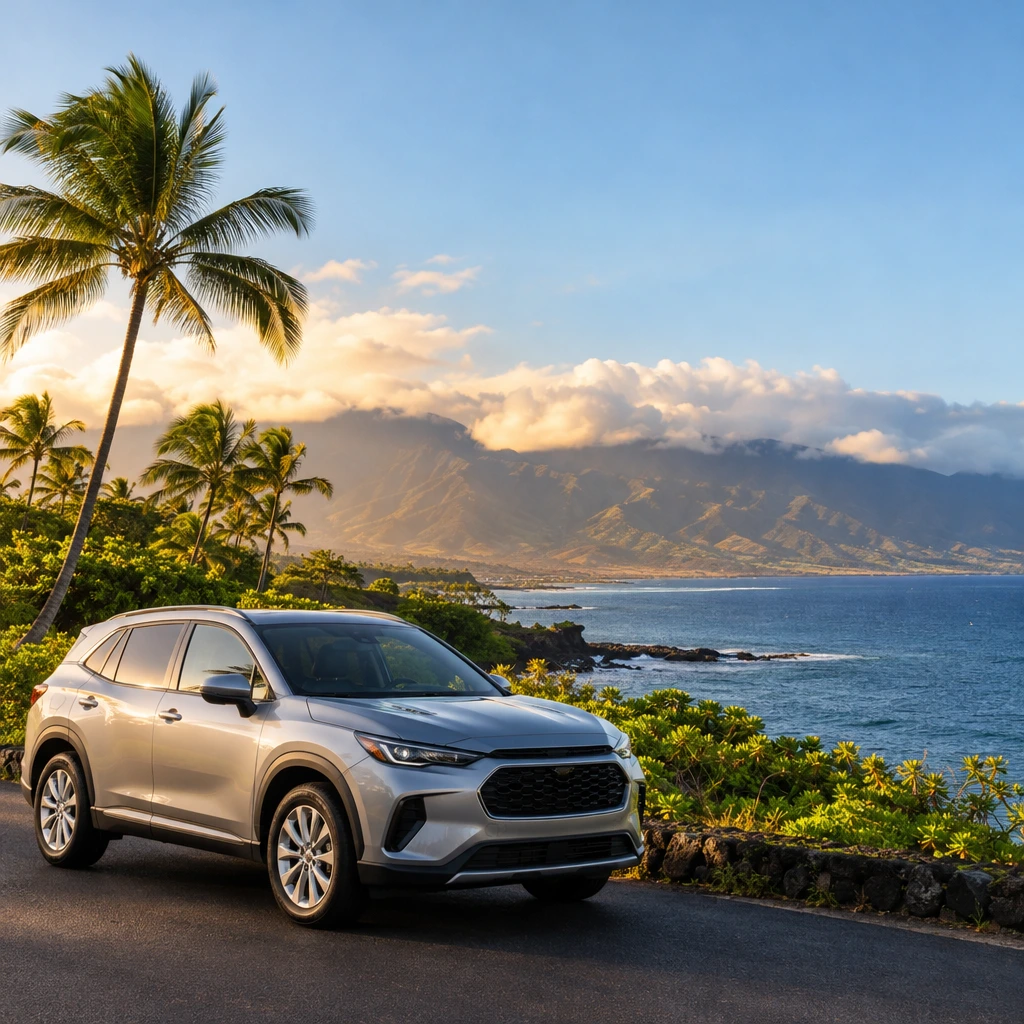
The vehicle category you select often affects your fuel budget more than the day of the week you collect the keys. Maui Cruisers focuses on practical economy and mid-size vehicles: the Toyota Corolla, Toyota Camry, Honda CR-V, and Toyota RAV4. These models fit common Maui travel needs, including airport transfers, beach gear, groceries, luggage, scenic drives, and everyday errands.
Which vehicle fits your trip?
- Toyota Corolla: A practical choice for couples or solo travelers who want lower fuel use, easy parking, and a typically lower rental rate.
- Toyota Camry: A comfortable option for longer drives and travelers who want additional passenger and trunk space without moving into a large vehicle.
- Honda CR-V: Useful for families or groups carrying coolers, luggage, beach equipment, and day-trip supplies.
- Toyota RAV4: A versatile mid-size SUV for travelers who want more cargo flexibility while keeping the vehicle manageable for ordinary island driving.
Visitors sometimes associate Maui with Jeeps, luxury cars, or convertibles. Those vehicles may look appealing in vacation photos, but appearance does not automatically equal value. A novelty premium, higher rental rate, greater fuel consumption, or limited practicality can work against a budget-focused trip. For most everyday Maui travel, a Corolla, Camry, CR-V, or RAV4 offers reliable transportation without paying extra for a fantasy version of island driving.
Match the vehicle to your mileage
If you plan to spend most of your time near your resort and take only a few excursions, a Corolla may be enough. If you are planning a Hāna day, Haleakalā sunrise or sunset, beach-hopping, and visits to multiple towns, a Camry, CR-V, or RAV4 may provide greater comfort. The right choice is not necessarily the smallest vehicle; it is the smallest practical vehicle for your passengers, luggage, and plans.
Remember that hills, traffic, air-conditioning, luggage, and frequent stops can reduce real-world fuel economy compared with a manufacturer’s advertised figure. Use fuel-economy estimates as a planning guide, not a guarantee.
Maui Car Rental Tips for Lower Fuel Costs
Once you have chosen an affordable Maui car rental, your driving habits can make a meaningful difference. Maui is not enormous, but attractions are spread across the island. Efficient planning helps you spend less time retracing your route and less money at the pump.
Combine sightseeing by region
Organize your itinerary geographically. For example, combine several West Maui stops on one day rather than driving back and forth from your accommodation. Group Central Maui errands together, and plan Upcountry stops around a Haleakalā visit when practical. A scenic drive is more enjoyable when it is intentional instead of the result of repeated detours.
- Write down your priority stops before leaving your accommodation.
- Group nearby beaches, restaurants, viewpoints, and markets on the same outing.
- Allow extra time for traffic, one-lane bridges, stops, and changing weather.
- Refuel before remote portions of your route, especially when planning a long day away from major commercial areas.
- Use regular gasoline unless your vehicle specifically requires a higher grade.
Driving etiquette matters, too. Go Hawai‘i recommends driving slowly, letting local drivers pass, avoiding tailgating, and yielding properly at one-lane bridges along the Hāna Highway. Relaxed, considerate driving can reduce abrupt acceleration and braking while making the trip safer and more respectful.
Do not overlook parking and idle time
Fuel is not the only operating expense. Hotel parking, resort parking, attraction fees, and time spent idling can add to the total cost. Ask your accommodation about parking before you book, and avoid leaving the engine running while waiting for passengers or sightseeing.
If you are visiting Haleakalā, prepare for conditions that differ sharply from the coast. The National Park Service reports that temperatures can range from approximately 80°F in Kīpahulu to around 30°F at the summit, with conditions changing quickly. The National Park Service Haleakalā weather information is worth reviewing before a high-elevation drive.
When a Long-Term Car Rental in Maui Makes Sense
A longer rental can be more economical when you are staying for a week or more, working remotely, visiting family, relocating temporarily, or planning multiple island excursions. It also eliminates the need to arrange separate transportation every time you want to leave your resort area.
However, do not assume that keeping a car for the entire trip is always cheapest. If you are spending several days at a walkable resort and have airport transfers or organized tours, you may save money by renting only for the days you will drive. Compare the rental total, parking, fuel, and transportation alternatives.
For travelers who do want a car throughout their stay, Maui Cruisers provides a practical alternative to a one-size-fits-all booking process. Customers can book online or over the phone, and communication takes place with real people by phone or text rather than an automated agent or call center. Contact form submissions go directly to a team member, which can be especially helpful when you need to discuss dates, vehicle size, an extended stay, or a change to your plans.
That personal approach matters when prices and availability are changing. Instead of guessing which vehicle fits your itinerary, you can explain how long you will be on Maui, how many people are traveling, and how much driving you expect to do. The goal is straightforward: dependable transportation at a reasonable rate, without paying for features that do not improve your trip.
Conclusion: Plan the Timing, Then Control the Total Cost
The best time to rent a car in Maui is usually a period outside major travel peaks, booked early enough to preserve vehicle choice and reviewed carefully for total cost. Yet the biggest fuel savings generally come from selecting an efficient vehicle and planning your driving—not from trying to predict the exact day gasoline prices will fall.
Check dated Maui fuel prices before your trip, build a realistic mileage estimate, compare weekly or long-term rates, and account for parking and fees. A Toyota Corolla, Camry, Honda CR-V, or Toyota RAV4 can deliver the comfort and flexibility most visitors need while helping keep fuel costs under control.
For an affordable Maui car rental, contact Maui Cruisers online or by phone. A real member of the team can help you choose a practical vehicle for your itinerary, whether you need a short rental, an extended stay, or a fuel-conscious way to explore the Valley Isle.