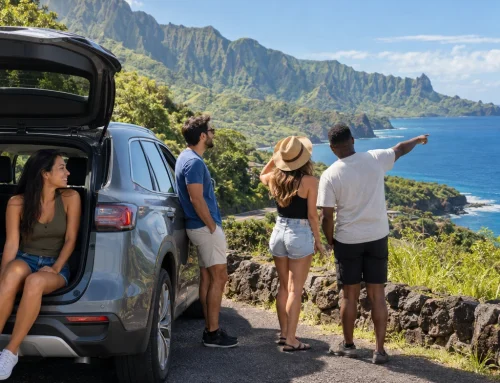
Planning a family trip to Maui means thinking beyond beach bags and sunscreen. You’ll also need a safe, correctly installed car seat and a vehicle that works for your children, luggage, and island plans. Choosing a Maui car rental with kids can feel complicated, especially when you’re comparing seat requirements, rental-car options, and the space needed for a day on the road. A little preparation makes it easier.
This guide covers Hawaii’s child-restraint rules, how to choose and install a car seat, and what to consider when selecting a family vehicle. It also explains how practical options such as a Toyota Corolla, Toyota Camry, Honda CR-V, or Toyota RAV4 can suit different family needs. Whether you’re staying for a few days or arranging a long-term car rental in Maui, you can use these tips to plan a safer, more comfortable trip without paying extra for features your family may not need.
Maui Car Rental with Kids: Start with the Right Car Seat
Before comparing vehicles, work out which restraint each child needs. The right choice depends on your child’s age, height, weight, and the limits printed on the car-seat label—not simply on whether a seat is described as “infant,” “convertible,” or “booster.” Hawaii law requires children to ride in an appropriate child passenger restraint system. Requirements can depend on a child’s age and size, so check current guidance from the State of Hawaii before you travel.
As a general safety principle, keep children in each stage of protection for as long as the seat manufacturer allows. That may mean a rear-facing seat for an infant or toddler, a forward-facing seat with a harness for an older child, and then a booster seat until the adult belt fits correctly. Don’t move a child to the next stage just because a sibling has done so or because the trip is short.
Bring a seat or arrange one ahead of time
Families often prefer bringing a familiar seat from home. You already know its history, instructions, and fit for your child, and you can practice installing it before leaving. If you plan to use an airline seat for your child, confirm the airline’s requirements and whether your restraint is approved for aircraft use. A travel cart or approved car-seat bag may make airport transfers easier.
If you hope to use a rental car seat, contact the rental company before booking to ask whether an appropriate seat is available for your child’s age and size, how it is reserved, and what fees or installation arrangements apply. Availability and policies can vary. Don’t assume a seat will be waiting unless the company confirms it. In either case, allow time to check the seat and install it properly when you collect the car.
Check Hawaii’s rules before you travel
Child-restraint laws can change, and the rules may include age- or size-based requirements and exceptions. Verify the current Hawaii requirements with an official state source before your trip, then compare them with the car-seat manufacturer’s instructions. Following the law is the minimum; best practice is to keep a child in the appropriate restraint until they have outgrown it according to the seat’s limits. Every passenger should also use a seat belt whenever the vehicle is moving.
How to Choose a Family Car Rental in Maui
The best family vehicle is the one that fits your passengers and gear safely, not necessarily the largest or most eye-catching option. Think through your usual day: Will you have one or two car seats? Are you bringing a stroller, beach equipment, or several suitcases? Will older children need room to settle in during longer drives? Those details can help you choose between an economy or midsize sedan and a compact SUV.
When a sedan may be enough
A Toyota Corolla can be a sensible fit for a smaller family travelling with modest luggage. A Toyota Camry offers another sedan option if you’d like a little more room for passengers and bags. Sedans can be practical for everyday Maui driving, errands, and parking, while often helping keep rental costs and fuel use more manageable than a larger vehicle.
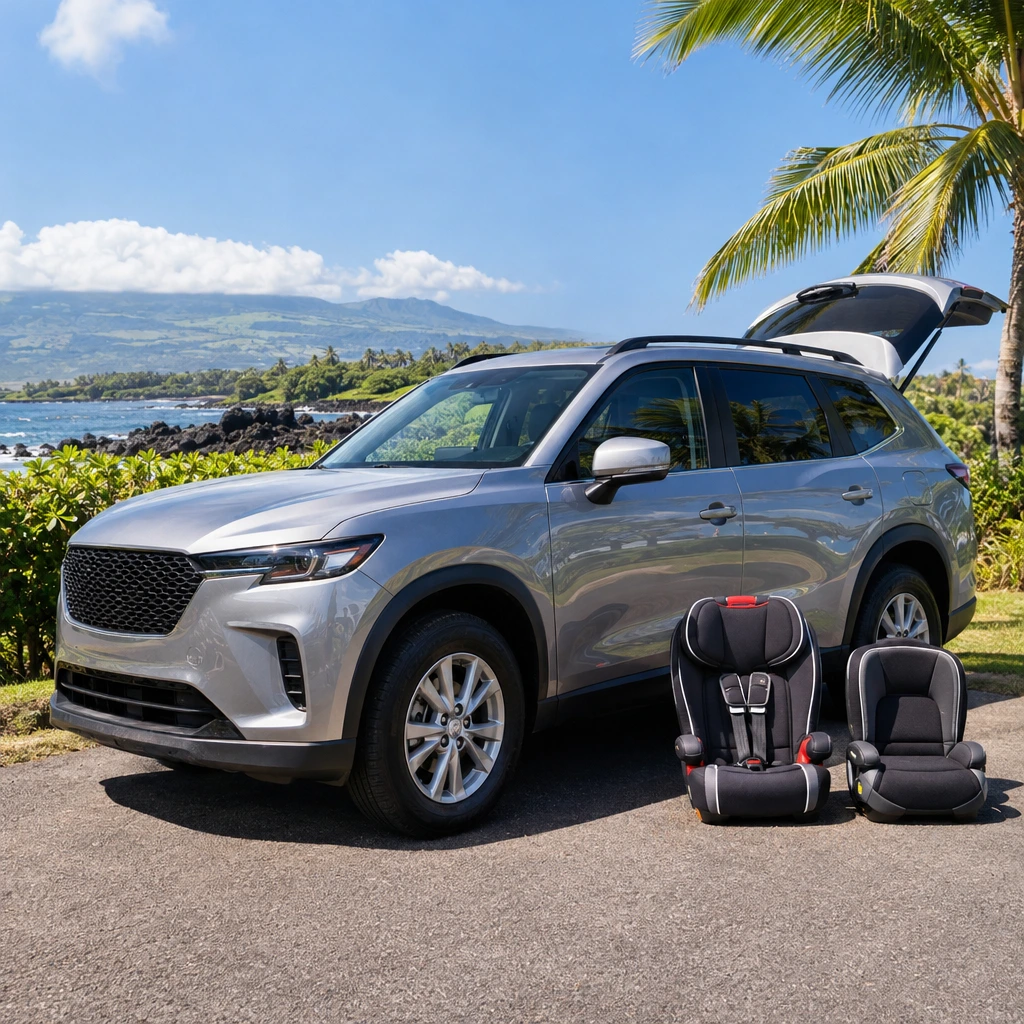
However, don’t judge fit from a vehicle’s general category alone. Car-seat shells differ in size, and the shape of a back seat can affect how easily a rear-facing seat fits behind the front passenger. If you’re travelling with multiple restraints, check whether they fit side by side and whether each seat can be installed securely. The only reliable test is to try your actual seats in the specific vehicle when it’s available.
When a compact SUV could help
A Honda CR-V or Toyota RAV4 may be worth considering if your family needs more cargo flexibility or easier access to the back seat. That extra room can be useful when packing a stroller, groceries, and day-trip items. Still, an SUV is not automatically the right answer: compare the space you need with the rental price, fuel costs, and how much gear you’ll really bring.
Maui’s everyday roads and parking areas don’t require a novelty vehicle. For many families, a dependable sedan or compact SUV is a more practical choice than paying a premium for a vehicle selected mainly for its image. Maui Cruisers focuses on economy and midsize options, including the Corolla, Camry, CR-V, and RAV4. The company does not rent Jeeps, luxury vehicles, or convertibles; its fleet is designed around straightforward transportation and value.
- One child seat and light luggage: Compare a Corolla with the space you actually need.
- More passenger or trunk room: Consider a Camry or compact SUV.
- Multiple car seats or bulky gear: Ask about fit and cargo space before you book, and test the seats when you pick up the car.
- A longer stay: Compare the full rental cost, not only the daily rate, and consider fuel economy over the whole trip.
Installing Car Seats and Keeping Kids Safe on Maui Roads
Even a high-quality car seat can’t protect a child properly if it is installed incorrectly. Read both the seat manual and the vehicle owner’s manual before installation. The manuals explain whether to use the lower anchors or the seat belt, where those connections are located, and any restrictions on using them together. Follow the specific instructions for your seat and vehicle rather than relying on a general rule.
After installation, check for a secure fit where the seat connects to the vehicle, following the manufacturer’s method. Make sure the seat is set at the correct recline angle, especially for a rear-facing infant seat. Tighten the harness so it fits snugly and lies flat, and position the chest clip as directed by the seat instructions. Remove bulky coats before buckling a child; if needed, place a blanket over the harness after it is secured.
Build time into pickup
Don’t plan to install a child restraint in a rush on the way to your first stop. Set aside time at pickup to locate the anchors or belt path, install the seat, and check the harness. If you’re not confident about installation, arrange help from a qualified child passenger safety technician where available. Rental staff may be able to explain vehicle features, but don’t assume they can install or certify a car seat.
For families using more than one restraint, consider installation order and access to the seat belt buckles. A tightly packed back seat can make it hard to buckle children in correctly, even if the seats technically fit. Try each position, check that adjacent seats don’t interfere with one another, and make sure adults can reach the necessary buckles.
Plan for the trip, not just the pickup
Island outings can include winding roads, changing weather, and longer stretches between planned stops. Pack water, snacks, sun protection, and any medications where an adult can reach them safely. Keep loose items secured in the cabin, and never leave children unattended in a parked vehicle. Before setting off, confirm that everyone is buckled, the driver knows the route, and phones or navigation are set up before the car is moving.
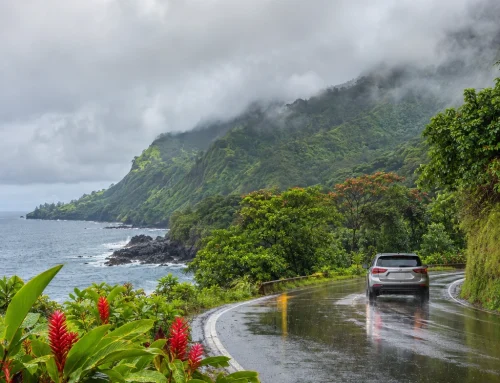
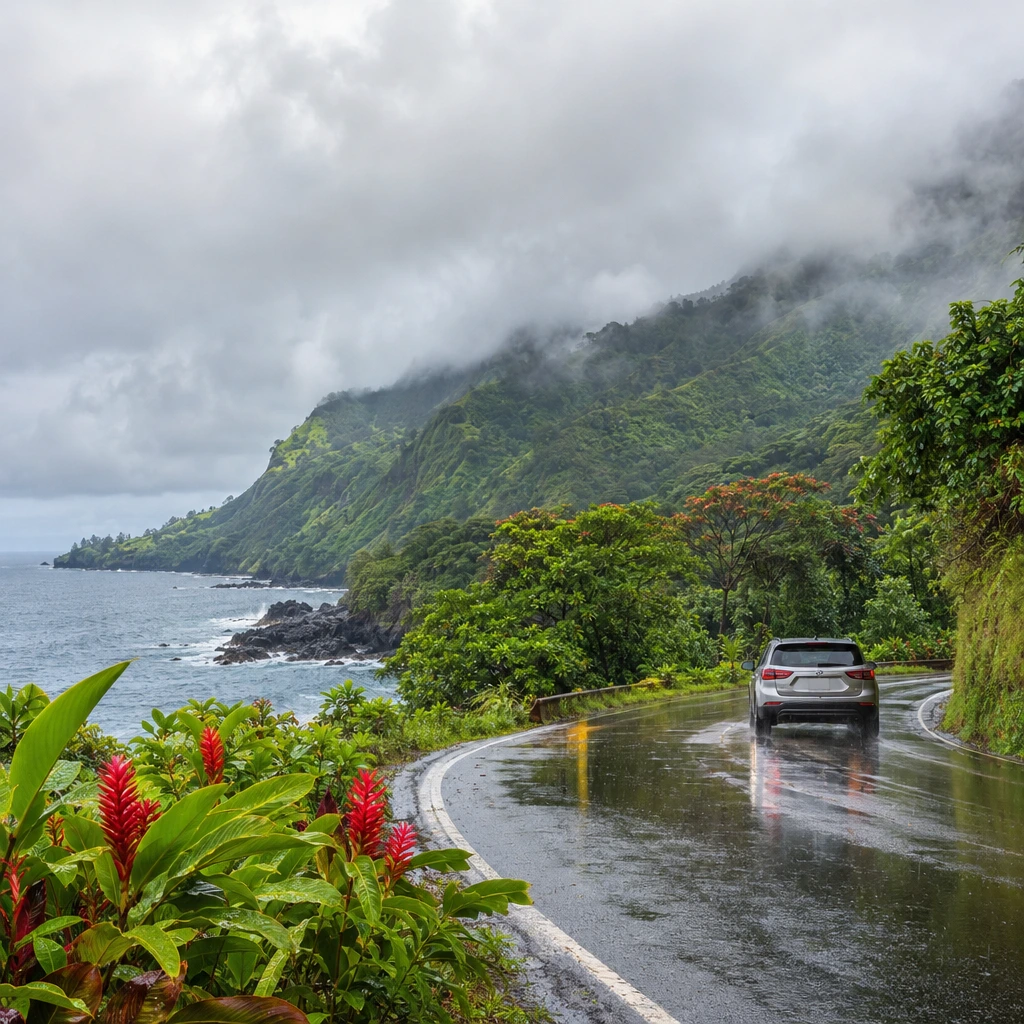
If your plans include the Road to Hana or another long drive, remember that a comfortable restraint and sensible breaks matter as much as trunk space. Plan stops in advance, follow local road signs, and never stop in unsafe places for a photo. A family-friendly vehicle is one that lets you travel calmly and safely—not one that encourages you to take unnecessary risks.
Booking an Affordable Maui Car Rental for Your Family
Family costs can add up quickly, so it helps to compare the total price of transportation rather than focusing only on a headline rate. Check the rental dates, included mileage or other terms, insurance choices, any additional-driver costs, and the company’s policies for children’s seats. If you’re bringing your own restraints, include the airline’s baggage rules and the practical effort of carrying them in your travel plans.
For a longer visit, an affordable Maui car rental can make it easier to reach beaches, groceries, restaurants, and day-trip starting points on your own schedule. A long-term car rental in Maui may also suit families staying for several weeks, but ask how the quoted rate works for your exact dates and what conditions apply. Booking online or by phone gives you a chance to confirm the vehicle category and raise questions before arrival.
Maui Cruisers offers economy and midsize vehicles such as the Toyota Corolla, Toyota Camry, Honda CR-V, and Toyota RAV4. Since family space needs vary, contact the team with your passenger count, car-seat plan, and luggage needs before choosing. Maui Cruisers emphasizes communication with real people: its team handles inquiries by phone or text, and contact form submissions go to a real person. For questions about vehicle fit, availability, or booking details, ask directly rather than guessing from a vehicle photo.
Conclusion: Make Family Travel Easier Before You Arrive
A smooth Maui car rental with kids starts with two decisions: choosing the right child restraint and selecting a vehicle that fits your family’s real needs. Confirm current Hawaii car seat laws, follow your seat and vehicle manuals, and allow time to install and check every restraint. Then compare a sedan with a compact SUV based on passenger space, car-seat fit, luggage, fuel use, and the total rental price.
For many families, a practical Corolla, Camry, CR-V, or RAV4 is all that’s needed to explore the island without paying for unnecessary extras. If you’re comparing car seats for rental cars in Maui or planning a longer stay, contact Maui Cruisers before booking to discuss the vehicle category and your questions. A little planning now can make airport pickup, everyday errands, and island drives much more comfortable for everyone.