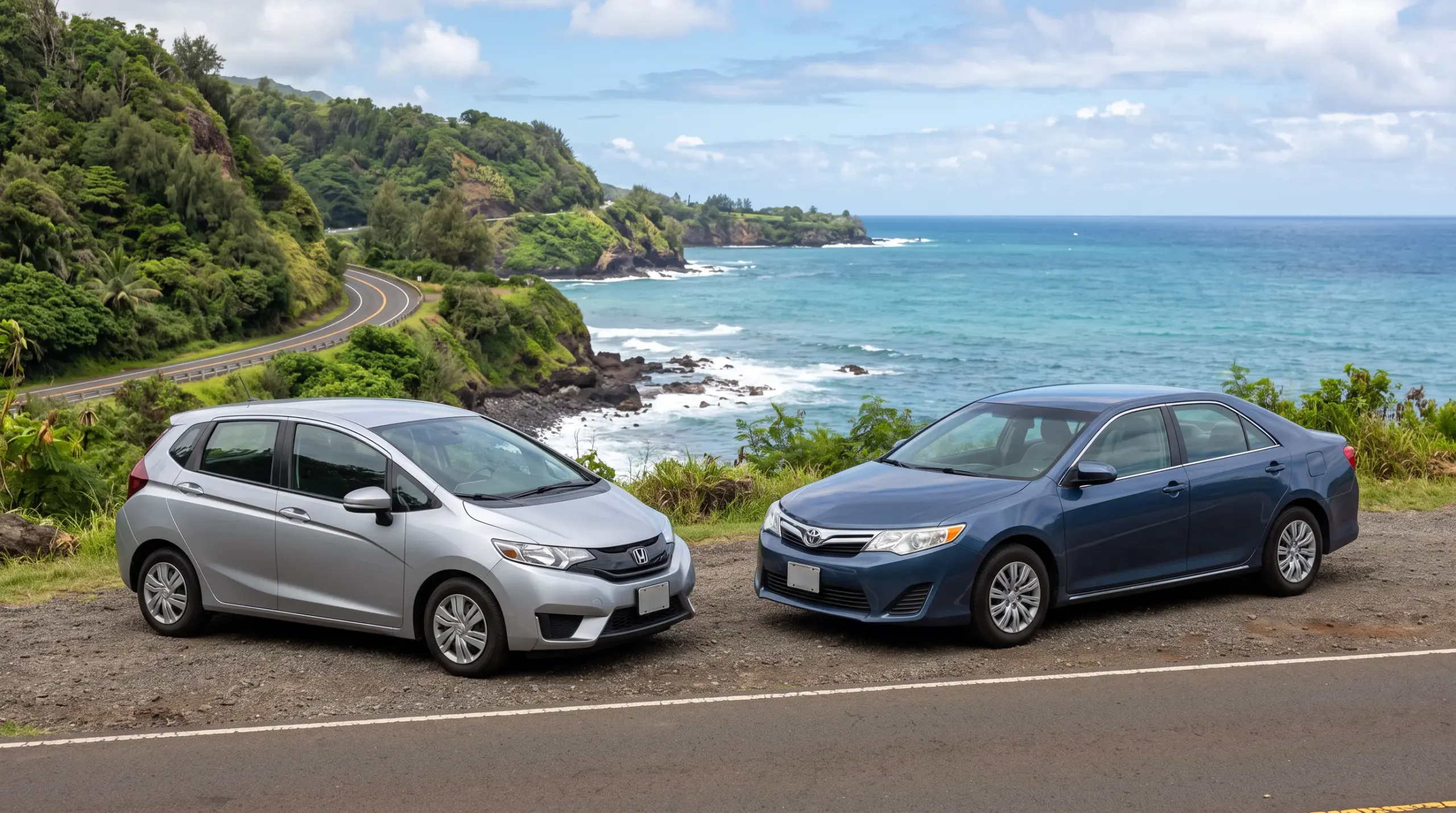
When planning a Maui vacation, the daily rental rate is only part of the real cost. The vehicle you choose can affect fuel spending, parking convenience, luggage capacity, comfort on longer drives, and even how much you pay in rental-related taxes and fees. That is why comparing a compact car with a mid-size rental is more useful than simply choosing the lowest advertised price. For travelers searching for cheap car rentals Maui visitors can rely on, the right answer usually depends on how many people are traveling, how far you plan to drive, and how long you need the vehicle. In this guide, we compare compact and mid-size rentals across the costs that matter most. You will learn when a compact car is the cheapest option, when a mid-size vehicle provides better value, and how long-term rental pricing from a local company such as Maui Cruisers may change the calculation.
How Cheap Car Rentals Maui Travelers Compare Can Affect the Final Price
A compact car is typically the least expensive vehicle category to rent. It often has a lower base rate, uses less fuel, and is easier to park in busy resort areas and smaller roadside lots. For a couple or solo traveler, those advantages can make a compact car rental Maui visitors choose the most economical option from the start.
However, the cheapest advertised daily rate does not always produce the lowest overall trip cost. A vehicle that is too small may require travelers to divide luggage between the passenger area and trunk, make long drives less comfortable, or force a group to book an additional vehicle. A mid-size rental may cost more per day but provide better passenger space, a larger trunk, and a more relaxed driving experience for a family or group.
There is also a fixed-cost issue to consider. Hawaii’s rental motor vehicle surcharge tax is charged at $7.50 per day, or portion of a day, beginning January 1, 2026, according to the Hawaii Department of Taxation’s current rental motor vehicle surcharge instructions. Because this charge is based on the rental day rather than whether the vehicle is compact or mid-size, selecting a smaller vehicle does not eliminate it. The same principle applies to other charges that may appear on a rental agreement.
The basic cost advantage of a compact
Compact cars usually win when the comparison is based on:
- The lowest base rental rate
- Fuel consumption for ordinary sightseeing
- Easy parking and maneuverability
- Renting for one or two people
- Traveling with limited luggage
For a couple staying in one resort area and taking shorter day trips, the compact category is often the logical starting point. It is especially attractive when the vehicle will spend several hours parked while you are at the beach, dining, or exploring an attraction.
Why a mid-size rental can still be economical
A mid-size vehicle may offer more value when four adults are traveling together, when everyone has full-size luggage, or when the itinerary includes long drives across the island. More space can reduce discomfort and make it easier to keep bags secure and out of sight. If a mid-size rental has a modest price difference, the added comfort may be worth more than the small daily savings from a compact.
Compact Car Rental Maui: When It Usually Saves the Most
For many visitors, a compact car rental Maui travelers book is the best choice for keeping transportation costs under control. The biggest advantage is not always dramatic fuel savings on a single day. Instead, the savings accumulate over a week or longer through a lower rental rate, simpler parking, and less temptation to use the vehicle for unnecessary driving.
Compact cars are a strong fit for couples, solo travelers, and visitors staying near Kihei, Wailea, Lahaina, or another area where most daily activities are relatively close together. They are also practical for travelers who plan to combine rental-car days with beach time, resort transportation, tours, or occasional rideshare use.
Fuel savings depend on your itinerary
Fuel economy matters most when you drive frequently. A traveler who makes a single airport transfer and a few short trips may not save much fuel by choosing a compact. By contrast, an itinerary with repeated drives between South Maui, Central Maui, Upcountry, and West Maui can make efficiency more meaningful.
Before booking, estimate your approximate mileage. Add the distance for airport transfers, sightseeing days, restaurant trips, and any planned scenic drives. Then compare the vehicle’s expected fuel economy. The result will not be exact because traffic, hills, air-conditioning use, and driving habits affect fuel consumption, but it will help you see whether fuel savings are likely to be significant or merely incidental.
Parking and convenience are part of the budget
Compact cars are also easier to handle in crowded parking areas and narrow spaces. That matters in popular visitor areas, where a larger vehicle can be more difficult to maneuver. It may also reduce the stress of stopping at small viewpoints, local businesses, and roadside attractions.
Still, a compact should not be selected solely because it is small. Check the trunk dimensions and consider your luggage before finalizing the reservation. Two large suitcases, carry-on bags, beach equipment, and personal items can quickly use more space than expected. If luggage must remain visible inside the cabin, the practical value of a larger trunk may outweigh a small daily rate difference.
Mid-Size Car Rental Maui: When More Space Becomes Better Value
A mid-size car rental Maui visitors choose can be the better financial decision when it allows everyone to travel comfortably in one vehicle. For a family of four, the difference between a compact and mid-size rental may be less important than avoiding an upgrade, a second vehicle, or an uncomfortable trip with luggage stacked around passengers.
Mid-size rentals generally provide additional legroom, a wider cabin, and more usable cargo capacity. Those features are valuable on longer drives, particularly if your plans include several full-day excursions. They can also make it easier to carry coolers, strollers, snorkeling equipment, or shopping bags without crowding the passenger area.
Compare the price per traveler, not only per vehicle
One useful Maui car rental comparison method is to divide the total vehicle cost by the number of travelers. Suppose a compact costs less than a mid-size vehicle but seats the same number of people. The compact may still win. But if the mid-size vehicle is shared by four adults and eliminates the need for a second car, its higher daily rate may be the more affordable option overall.
For example, a mid-size rental that costs $12 more per day costs only $3 more per traveler when shared by four people. That difference could be worthwhile if the added space improves comfort and makes the group less likely to book separate transportation during the trip.
Long drives change the value equation
A vehicle that feels perfectly adequate for a 20-minute resort transfer may feel cramped after several hours on the road. If your itinerary includes multiple long sightseeing days, the value of a mid-size rental includes comfort and convenience, not only fuel or luggage space.
Road conditions and access rules should also be checked before setting out. Maui County provides an official road closure and notification page that travelers can review before driving. Conditions can change after storms, flooding, rockfalls, or other events, so a route should never be planned solely from an old itinerary or online map.
Long-Term Rentals, Fees, and the Real Cost of a Maui Vehicle
Short vacation rentals and long-term rentals should not be compared in exactly the same way. A daily rate may look attractive for a three-day booking but become expensive over several weeks. Conversely, a local rental company may offer a long-term arrangement that lowers the effective daily cost, making a mid-size vehicle more affordable than expected.
That is where Maui Cruisers can be especially relevant for visitors who need a car beyond a typical vacation week. The company focuses on affordable, long-term car rentals and allows customers to book online or by phone. When comparing options, ask for the full price for your exact dates rather than multiplying a short-term advertised rate.
Questions to ask before booking
- What is the total price for the complete rental period?
- Which taxes, surcharges, and fees are included or added separately?
- Is the quoted price based on a compact or mid-size vehicle?
- What mileage, insurance, roadside assistance, or additional-driver terms apply?
- Can the rental be extended if travel plans change?
- What happens if the selected vehicle category is unavailable?
Hawaii’s General Excise Tax is imposed on business activity, and businesses may choose to pass that cost through to customers. The state Department of Taxation explains the tax structure on its official General Excise Tax information page. Therefore, a reliable comparison should use the final quoted amount, not only the headline rental rate.
Long-term renters should also pay attention to how the rental term affects surcharge treatment. Hawaii rules include specific provisions for vehicles rented or leased for more than six months, while shorter arrangements are generally treated differently. Your rental provider can explain how the rules apply to your contract, so confirm the details before assuming that a long booking automatically removes any particular charge.
Maui Car Rental Comparison: Which Vehicle Is Cheapest for You?
The cheapest car rental Maui visitors can find is usually the vehicle that matches the trip without paying for unused capacity. Use the following guide as a quick decision tool:
- Choose a compact if you are traveling alone or as a couple, have modest luggage, and want the lowest likely base rate.
- Choose a compact if most driving will be local and parking convenience is important.
- Choose a mid-size if three or four adults need comfortable seating and luggage space.
- Choose a mid-size if you plan several long sightseeing days or need room for beach and family equipment.
- Request a long-term quote if you need the vehicle for multiple weeks, because the effective daily rate may differ from a short rental.
- Compare the final total after taxes, surcharges, mileage terms, insurance, and optional extras.
It is also smart to calculate the break-even point. Start with the difference between the compact and mid-size daily rates. Multiply that amount by the number of rental days. Then consider whether the added space eliminates other transportation expenses. If the mid-size upgrade costs $15 per day for seven days, the difference is $105 before taxes and fees. That may be worthwhile for four travelers, but unnecessary for one person who plans short drives.
For an affordable Maui vehicle rental, transparency matters as much as the vehicle category. A local company that clearly explains availability, long-term pricing, and booking terms can help you avoid surprises and choose based on your actual travel needs.
Conclusion: The Best Money-Saving Choice Depends on Your Trip
For most couples and solo travelers, a compact car is the most economical option. It usually offers a lower base rate, easier parking, and efficient transportation for ordinary Maui sightseeing. That makes it a strong choice for anyone prioritizing the lowest overall cost.
A mid-size rental, however, can deliver better value for families, groups, and travelers planning long drives. The additional space may justify the higher rate, especially when the cost is divided among several passengers or helps avoid booking extra transportation.
The smartest approach is to compare the complete price for your dates, including Hawaii’s rental-related surcharge and any other applicable fees. Then match the vehicle to your passengers, luggage, mileage, and rental length. For travelers seeking a compact car rental Maui option or a comfortable mid-size vehicle for an extended stay, Maui Cruisers makes it easy to request an affordable quote online or by phone and find the rental that truly saves money.